AtmoceBack-up possible
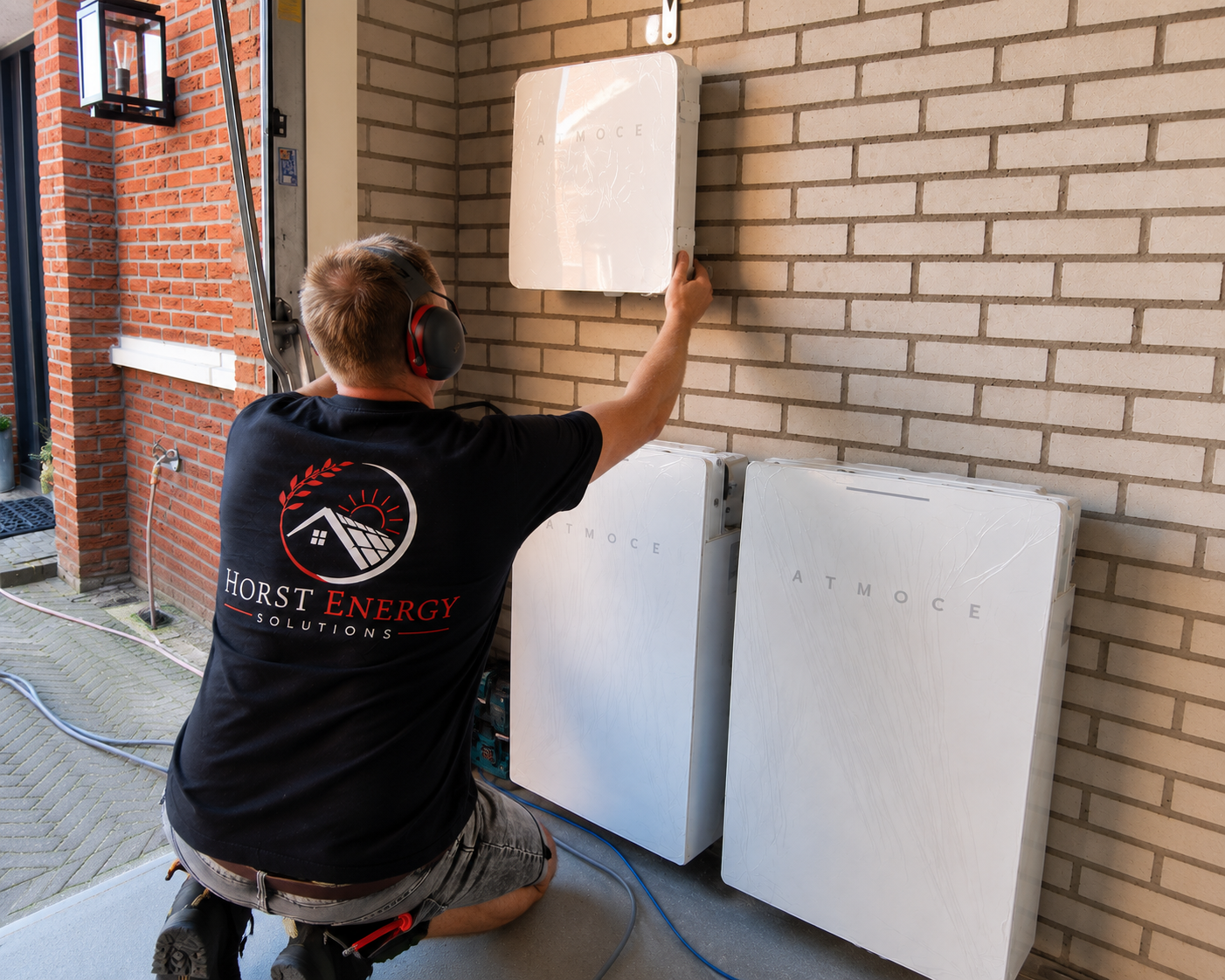
Atmoce M-ELV met M-Backup
Modular battery system with matching back-up module.
- Modular build for future expansion
- Back-up via the M-Backup module
- Installed and configured by us
A home battery stores energy so you can use it when it benefits you most — in the evening after a sunny day, or when electricity is expensive. We handle advice, installation, configuration and commissioning.
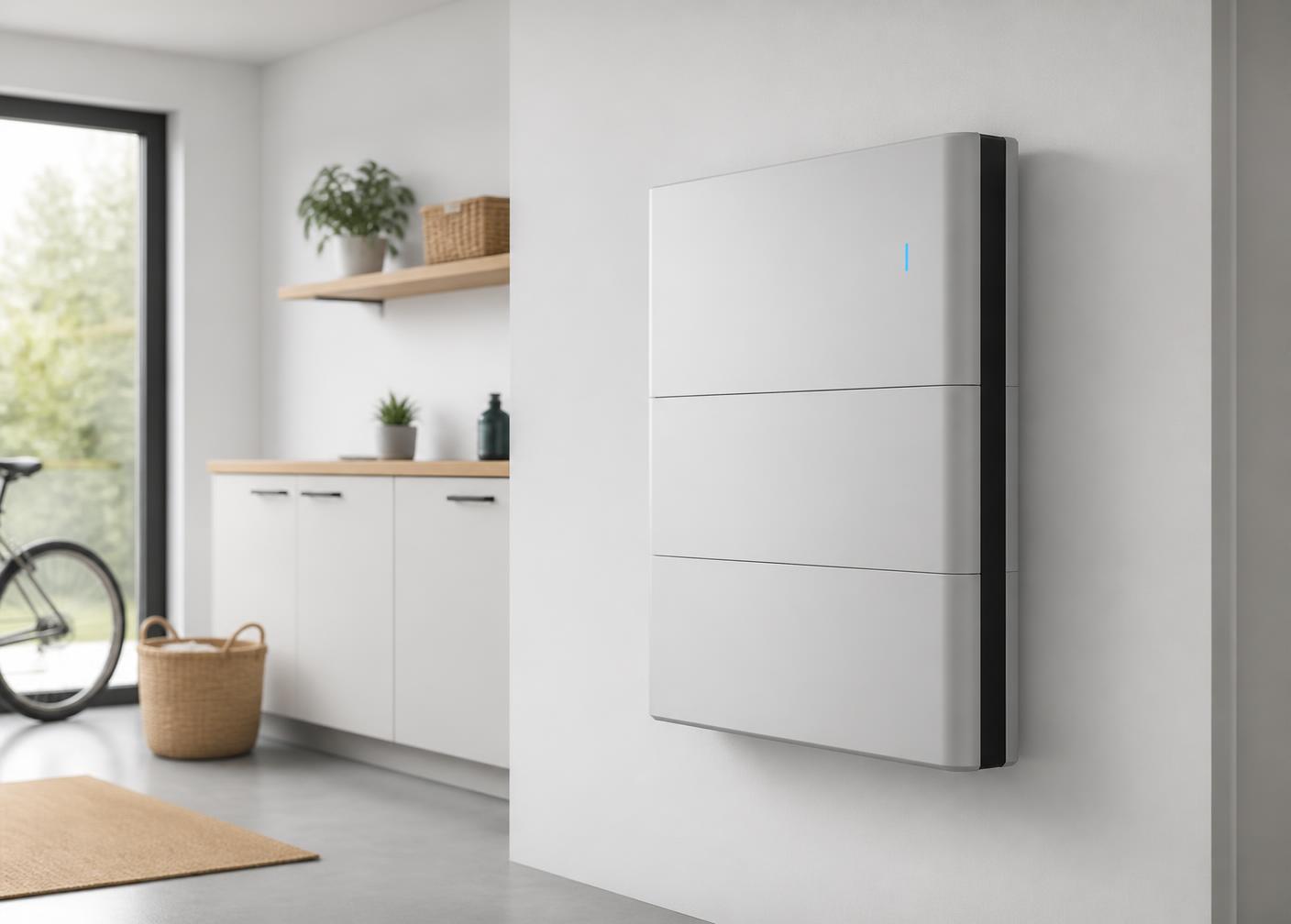
Every home and every energy need is different. That's why we compare home batteries on capacity, power, smart energy management, expandability and back-up options.
Modular battery system with matching back-up module.
Battery system built on a widely used platform.
Battery system combined with the EMS3 energy management system.
Compact home battery, designed for the Dutch market.
Entry-level model for homes with limited storage needs.
You will receive datasheets, manuals and warranty terms from us as part of the advice. We only take over verified manufacturer data; missing specifications are shown as “On request” until then.
Request documentation and adviceA home battery is an energy storage system that stores electricity and releases it back to your home later. Storage capacity is expressed in kWh (energy), and the charge and discharge power in kW (power). Together, both determine what the system can do for you in practice.
Solar panels generate power when the sun shines; consumption in a home is often higher later in the day. With storage, you use a larger share of your own generated electricity yourself, instead of exporting it. If you have a dynamic contract with hourly prices, the system can also charge and discharge based on the price per hour.
How much this saves in your situation depends on your consumption pattern, your contract and the chosen configuration. We do not make general promises about this; we prefer to calculate using your own figures.
A battery can be placed next to the solar inverter or on its own circuit in the consumer unit. Placement next to the inverter allows direct monitoring of PV production, making the control more precise. If there is no space, or no solar panels, a dedicated circuit is the way to go.
An energy management system (EMS) determines when the system charges, discharges or exports. This is based on measurement data, and with a dynamic contract also on hourly prices. Exactly which controls are possible differs per system — we determine that during the design phase.
Your connection partly determines which system is suitable. With three-phase, the distribution across the phases plays a role; with single-phase, it is the available power. A battery also needs its own protected circuit. We assess the existing consumer unit and advise whether an extension is sufficient or replacement is the wiser choice.
Back-up during a power cut is not an automatic feature of a home battery. Many systems actually switch off during a grid fault, because no voltage may be fed back onto the grid. Back-up requires a suitable system, a separate back-up circuit and correct grid separation. Often a limited circuit is chosen (lighting, internet, fridge) rather than the whole home.
We handle the placement, the electrical connection, the configuration and the commissioning. We pay attention to the installation location, ventilation, cable routing, protection and correct metering. After completion, we explain the operation and monitoring.
Send us your usage and a photo of your consumer unit. We will come back with a proposal that fits your installation — including what is needed electrically.