
Business energy storage with the ATMOCE M-ELV BattBank
Modular battery storage for businesses: 16.08 kWh and 8 kVA per pack, up to 7 packs stackable per cluster. AC-coupled, LFP, IP66 and an architecture below 60 V.
- 16.08 kWh per pack, up to 7 packs stackable
- 8 kVA continuous and 10 kVA maximum apparent power per pack
- LFP cells, > 90% AC round-trip efficiency, 10,000 cycles
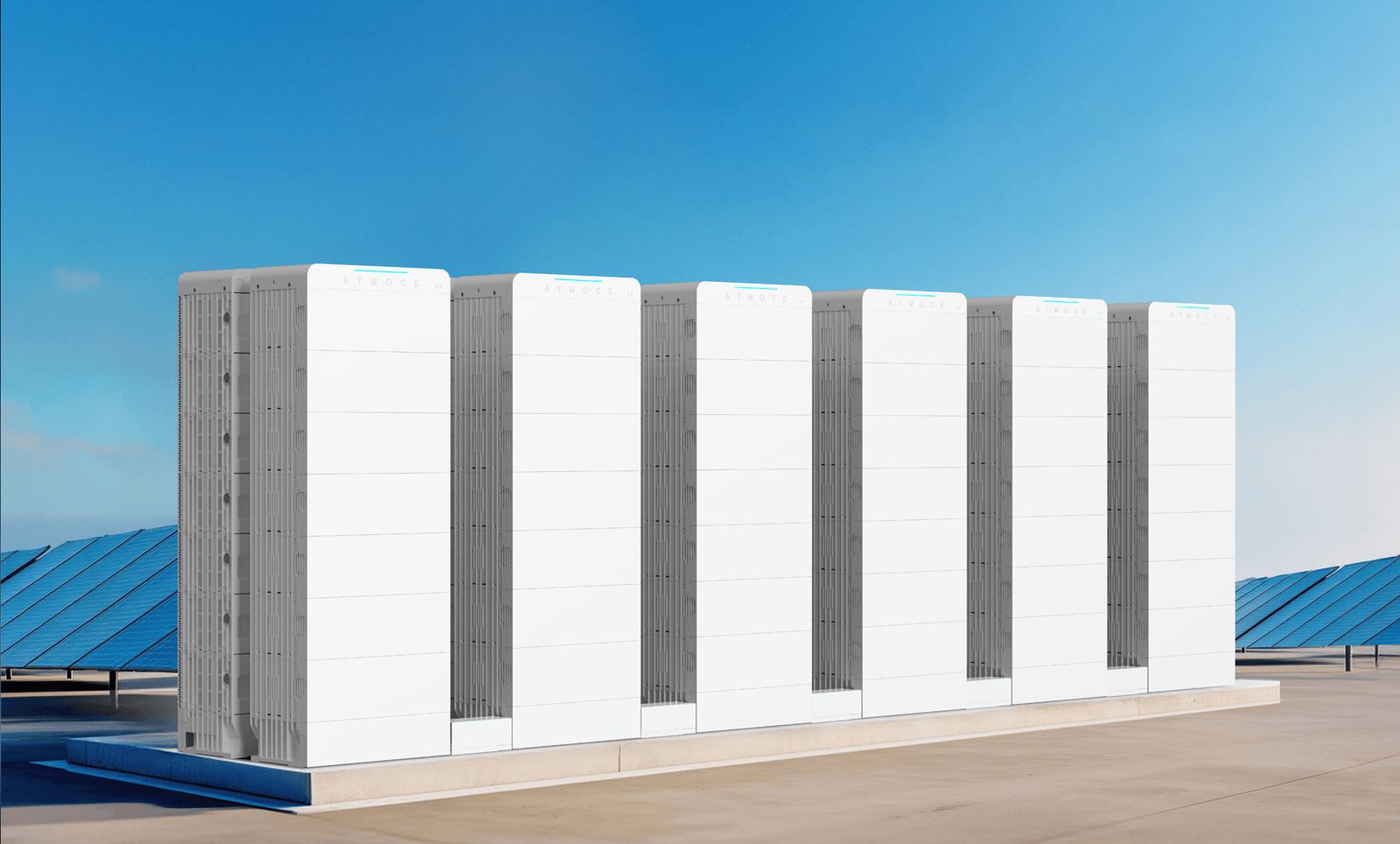
What is business energy storage?
A commercial battery system (BESS) stores electricity behind your own meter and releases it when it suits you better. That makes it possible to use your own solar power later in the day, shift consumption and align charge points and generation.
What a battery does not do is increase your contracted transport capacity. Storage can help steer power flows behind the meter, but it is not a generic solution for grid congestion. Whether peak management is achievable follows from your quarter-hour data.
Why we work with the ATMOCE BattBank
The M-ELV BattBank is AC-coupled and modular. The system therefore fits alongside an existing installation with solar panels and third-party inverters, without rebuilding the roof or the PV system. You scale per pack rather than per cabinet, which avoids paying for unused capacity.
The architecture operates below 60 V, so there is no high DC voltage in the system, which makes installation and maintenance simpler and safer.
Separate from our home battery
The residential ATMOCE M-ELV with 7 kWh modules stays deliberately separate. This page covers the commercial C&I version, the BattBank MS-16K-U.
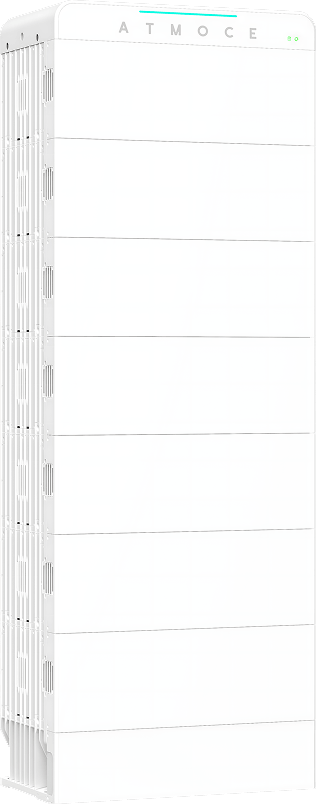
BattBank at a glance
- Model MS-16K-U, LFP cell chemistry
- 16.08 kWh and 314 Ah per pack
- 8 kVA continuous, 10 kVA maximum output apparent power
- Up to 7 packs stackable, around 112 kWh per cluster
- Positioned by ATMOCE up to 224 kWh within 0.88 m²
- IP66 and < 60 V extra-low voltage architecture
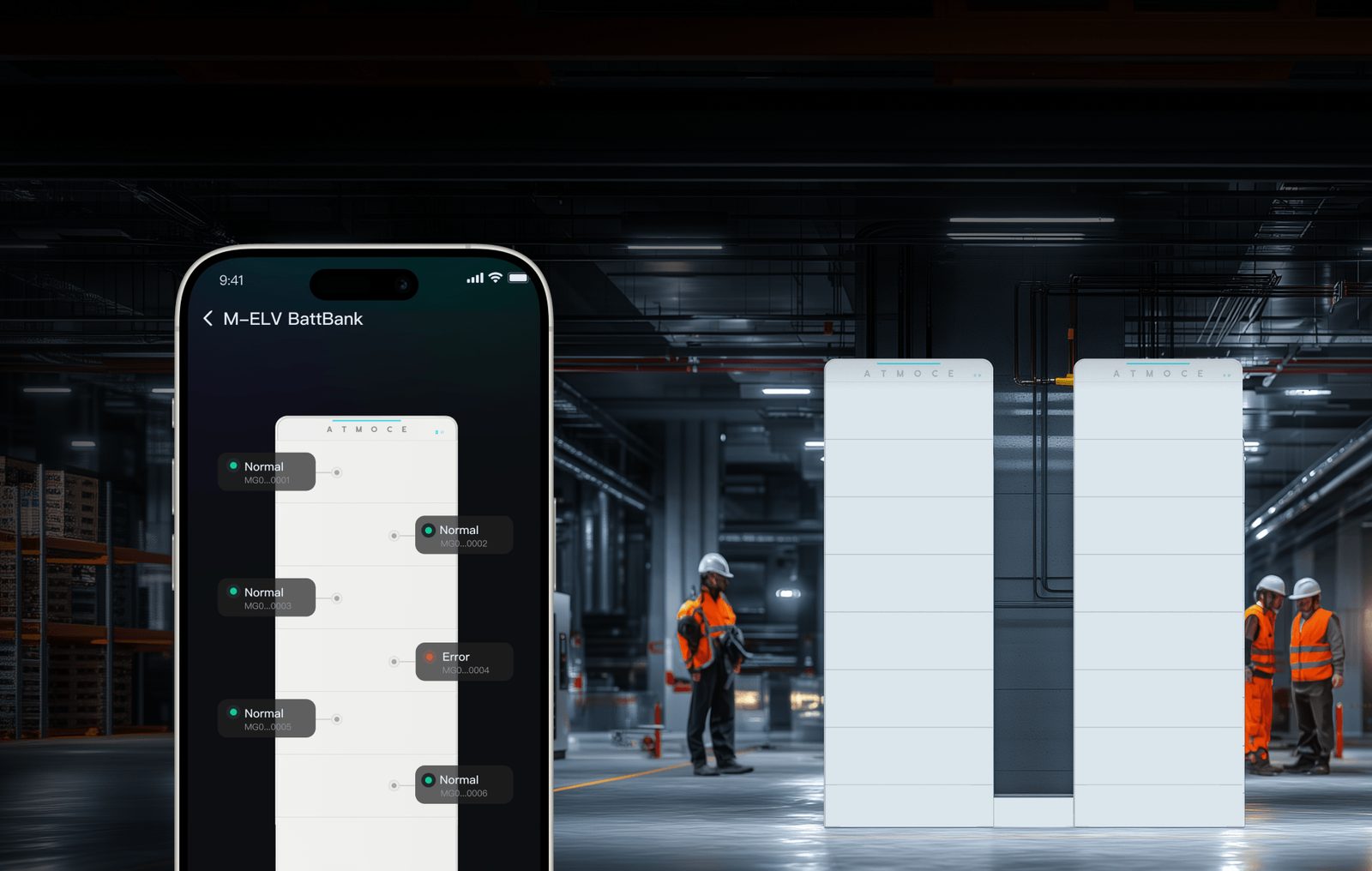
- VPP support for smart control
Specifications according to official ATMOCE product information. ATMOCE states a 15-year lifespan; warranty terms are provided on request under the manufacturer's conditions. The final configuration follows from the survey and design.
Scale up modularly, pack by pack
Start with the capacity that fits today and expand later. Up to seven packs can be stacked per cluster.
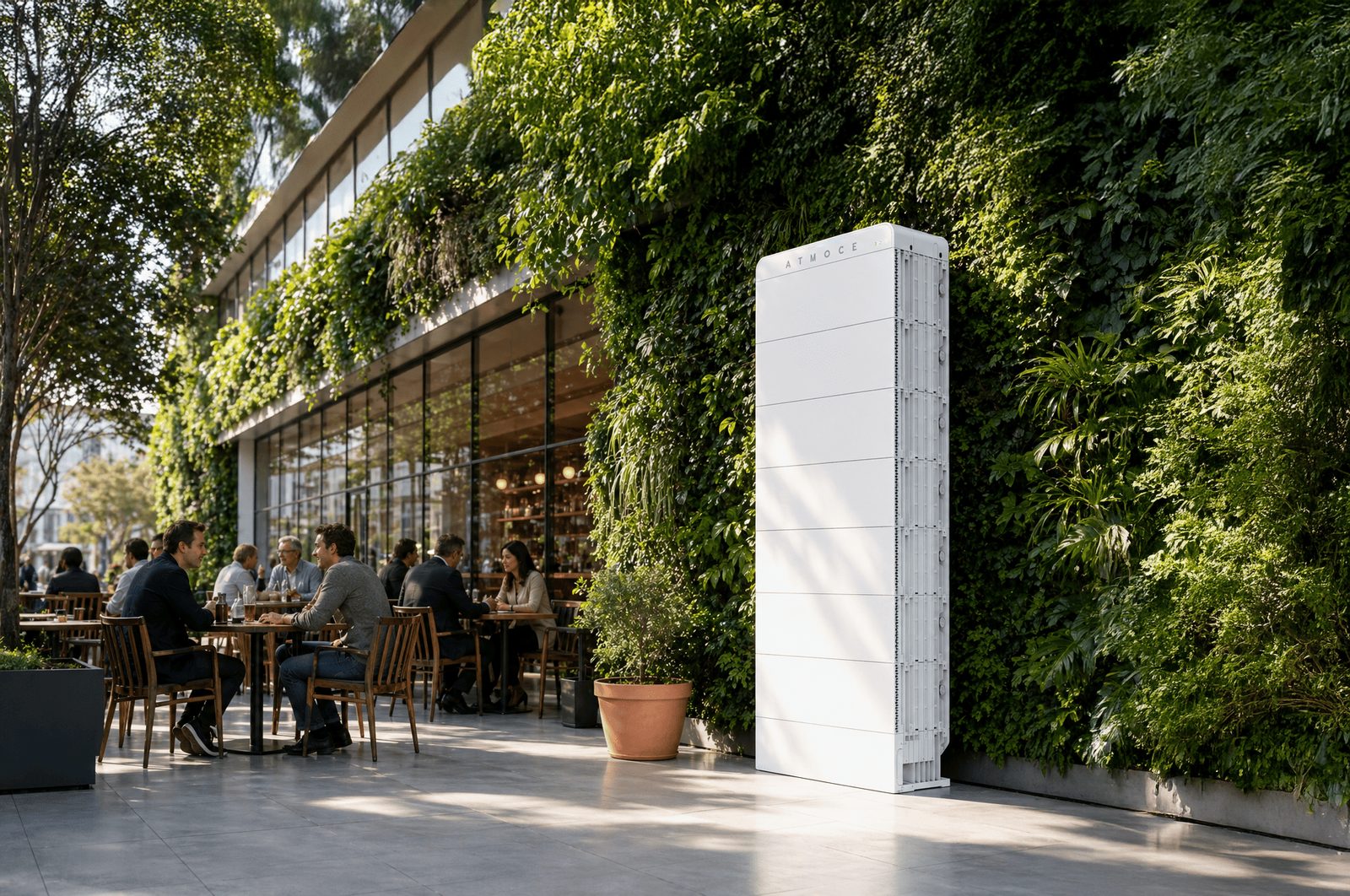
1 pack
16.08 kWh
8 kVA continuous
Up to 7 packs
≈ 112 kWh
one cluster
Multiple clusters
up to 224 kWh
within 0.88 m² per ATMOCE
How much capacity and power makes sense depends on your consumption profile, your connection and the available space. We size on your own metering data, not on a standard package.
Technical data M-ELV BattBank MS-16K-U
| Model | MS-16K-U |
|---|---|
| Cell chemistry | LFP (lithium iron phosphate) |
| Capacity per pack | 16.08 kWh |
| Nominal battery capacity | 314 Ah |
| Rated output apparent power | 8 kVA per pack |
| Max. output apparent power | 10 kVA |
| Max. stackable | 7 packs |
| AC round-trip efficiency | > 90% |
| Number of cycles | 10,000 |
| Dimensions (W × H × D) | 880 × 300 × 483 mm per pack |
| Ingress rating | IP66 |
| System architecture | Extra-low voltage, < 60 V |
Source: official ATMOCE product information. Subject to change by the manufacturer.
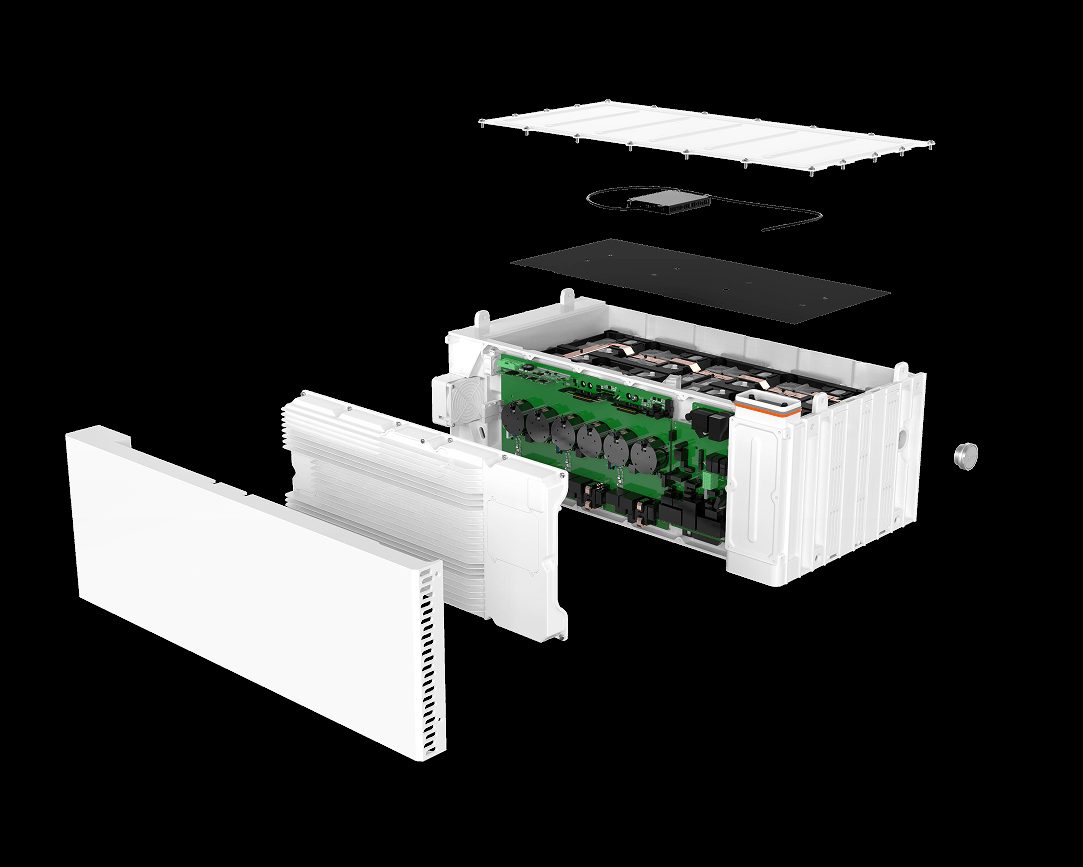
Safety at system and pack level
ATMOCE combines a low-voltage architecture with passive and active protection inside every pack.
- Extra-low voltage architecture below 60 V, without high DC voltage in the system
- Integrated passive fire suppression system
- Passive pressure relief (explosion-proof) valve in IP66 design
- Active multi-sensor monitoring at pack level
- Over- and undervoltage protection
- Overcurrent and short-circuit protection
- Thermal management
- Insulation fault detection (ISO detection)
Control, monitoring and VPP
Storage only pays off when the control logic is right. The system supports VPP and can be combined with smart energy management on site.
- VPP support according to ATMOCE
- Monitoring of charging, discharging and system status
- Aligned with solar panels, charge points and consumption
- Strategy per site: self-consumption, shifting or flexibility
We decide together which control strategy we configure. We attach no calculation example or fixed revenue to it without your own consumption and contract data.
What businesses use storage for
Which application makes sense in your situation follows from your consumption profile. It is often a combination.
Use more of your own solar power
Store generation you do not use during the day and deploy it later, instead of exporting it.
Shift consumption in time
Control charging and discharging at moments that suit your operation and your contract.
Peak management, when substantiated
Only useful if your quarter-hour data shows peaks can be absorbed within the available power. We check this against your own metering data.
Support business charging infrastructure
Control charge points and storage together so the available power on your site is distributed better.
Dynamic tariffs and flexibility
With VPP support the system can take part in smart control. The result depends on market and contract; we promise no fixed revenue.
Expand in phases
Start with the number of packs that fits today and expand when your consumption, PV or fleet grows.
Which sites this fits
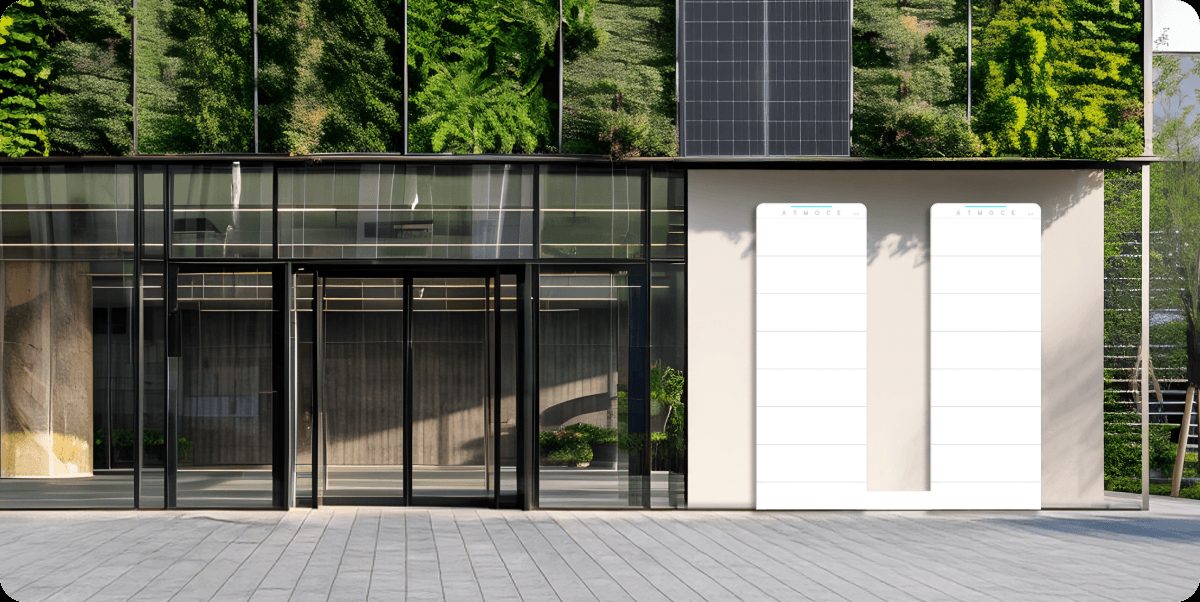
- SMEs with their own premises
- Offices and practices
- Retail and hospitality
- Smaller business sites and workshops
- Property owners and owners' associations with shared installations
- Sites with existing solar panels and/or charge points
If you have a heavy industrial profile or are considering a container system, we will say so openly: a different or additional system is needed and we look at bespoke work.
What usually goes with it
Smart energy management
Control of generation, storage, charging and consumption within the limits of your connection.
Explore the optionsBusiness charging infrastructure
Charge points with load balancing, expandable as your fleet grows.
Explore the optionsSolar panels
Generation on flat roofs, matched to your consumption and to any storage.
Explore the optionsFrequently asked questions
Wondering whether storage suits your site?
We assess your connection, consumption and generation and come back with a substantiated proposal based on your own data.